
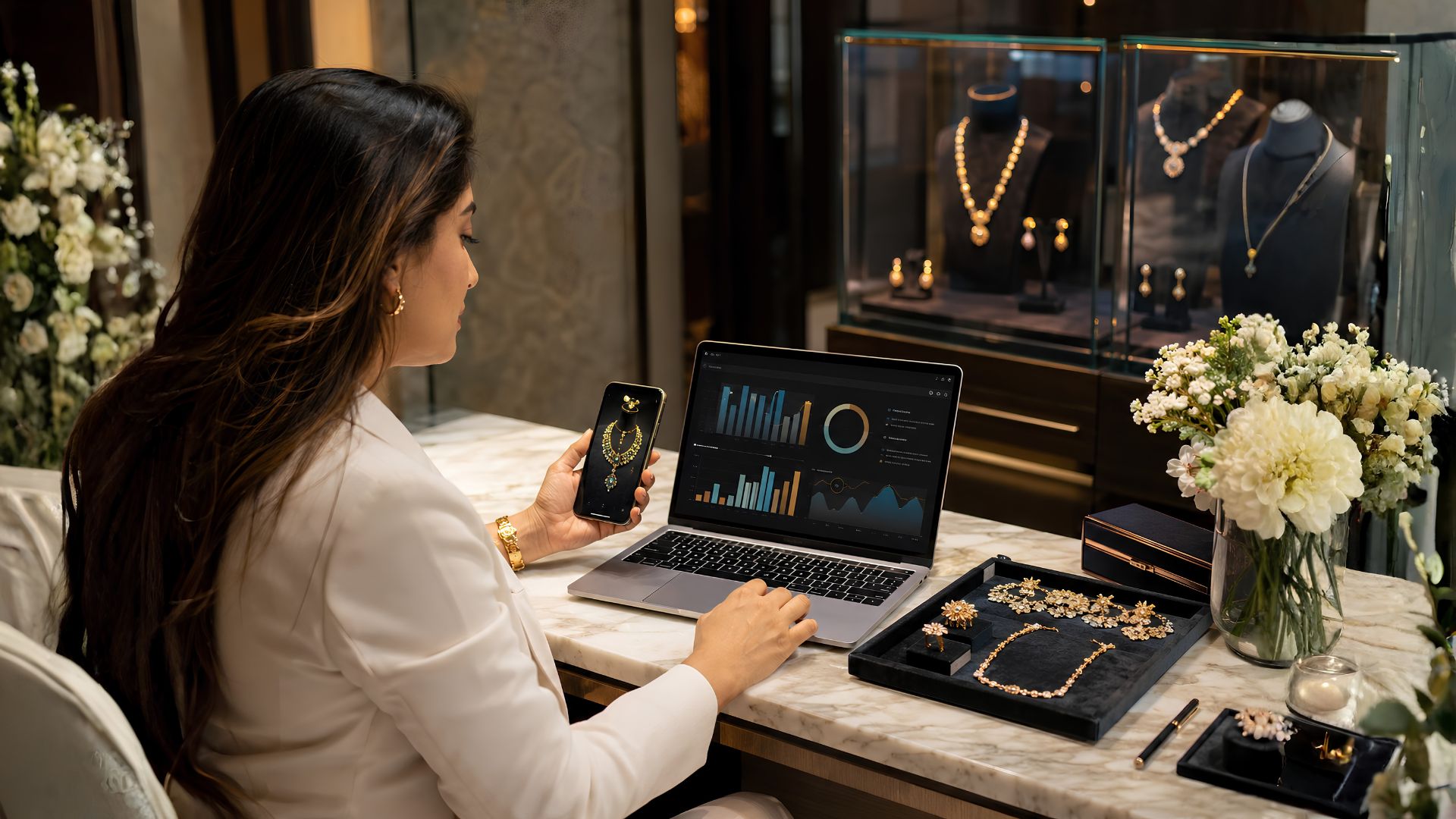




For jewellery brands, online jewellers and luxury retailers, social media marketing is no longer a nice extra. It is where customers discover collections, judge quality, compare styling ideas and decide whether a brand feels trustworthy enough to buy from. Jewellery is visual, emotional and often high value, so every post needs to create desire while also reducing hesitation.
Social platforms still shape discovery in the UK. DataReportal reported 55.5 million social media user identities in the UK in October 2025, equivalent to 79.7% of the population. That gives jewellery brands a major opportunity to reach people before they actively search for a product, visit a website or book a consultation. (DataReportal – Global Digital Insights)
Good social content can make jewellery feel more real. A necklace on a model, a ring turning in natural light or a bracelet shown with evening styling tells the customer far more than a flat product image. For this reason, social media marketing should be treated as a commercial growth channel, not just a visual gallery.
Why Social Media Marketing Matters for Jewellery Brands
Jewellery customers want to see scale, sparkle, texture and styling before they make a decision. A product page can explain the details, but social content can show how a piece feels in real life. This is where social media marketing helps jewellery brands move from passive visibility to active buyer interest.
The goal is not simply to gain followers. The goal is to build a recognisable brand that customers remember when they are ready to buy. That requires consistency across photography, captions, product education, customer service and the journey after someone clicks.
A luxury jewellery brand should use social channels to show craftsmanship, packaging, customer moments, design inspiration and practical buying guidance. When these elements work together, the audience begins to understand not only what you sell, but why your jewellery is worth choosing.
Build Content That Creates Desire and Trust
The strongest jewellery content blends beauty with information. Customers need to know what the piece looks like, but they also want to understand materials, size, finish, care, delivery and styling options.
Short-form video is especially useful for jewellery social media marketing because movement reveals detail. A diamond ring catches light differently as it turns. A gold chain looks different on the neck than it does on a tray. A pair of earrings may feel more desirable when shown with a complete outfit.
Education also builds trust. Explain gemstone cuts, ring sizing, necklace lengths, gold purity, hallmarking, jewellery care and styling combinations. These posts help customers feel more informed and make the brand feel more expert.
Collections such as bridal jewellery, personalised gifts and gold mangalsutra uk designs need content that explains meaning, craftsmanship and styling context. The more considered the purchase, the more valuable this education becomes.
A specialist digital marketing agency london can help turn product knowledge into structured content pillars, so posts are not random but connected to customer questions and commercial goals.
Connect Social Content With SEO and Website Growth

Social media should not operate separately from the website. Google’s SEO Starter Guide explains that SEO helps search engines understand content and helps users find a site and decide whether to visit it. Social platforms can reveal which products, questions and styling themes customers care about, then those insights can inform website content. (Google for Developers)
If videos about oval engagement rings perform well, that topic may deserve a buying guide or optimised collection page. If styling posts around layered necklaces drive saves and clicks, the website can support that interest with a matching category page and internal links.
Google’s product structured data guidance also explains that product information such as price, availability, review ratings and shipping details can appear more richly in Search when implemented correctly. For online jewellery sales, strong product data supports the journey after social discovery. (Google for Developers)
This joined-up approach makes social media marketing more valuable. Social content creates the spark, while SEO, product pages and email marketing help capture the customer when they are ready to compare or buy.
Use Paid Social to Support Jewellery Brand Growth
Paid campaigns can help jewellery brands reach new audiences, but the message must match the customer’s stage of awareness. A cold audience may need storytelling, lifestyle imagery and brand introduction. A warm audience may respond better to reviews, product detail, new collections or appointment prompts.
Retargeting is especially useful for jewellery because buying decisions often take time. Someone may visit a product page, save a post, compare options and return days or weeks later. Paid ads can bring that person back with a relevant message rather than forcing a hard sale too early.
The landing page matters. If an advert promotes bridal jewellery, the click should lead to a bridal collection or consultation page. If the campaign promotes gift ideas, the page should include filters, prices, delivery information and clear buying options.
Create a Social Growth Plan
Start with clear content pillars. A practical plan might include product detail, styling inspiration, craftsmanship, customer trust, education and seasonal campaigns. This keeps social media marketing consistent without making every post feel the same.
A clear social media marketing plan should also define what each platform is expected to do, from discovery and engagement to website traffic and repeat sales.
Next, invest in high-quality creative. Use close-ups, hand shots, model styling, packaging moments, behind-the-scenes videos and short clips showing jewellery in motion. The content should feel premium, but not so polished that it becomes cold or unrealistic.
Then connect each post to a next step. A product Reel should link to a product or collection page. A styling guide should support a buying guide. A consultation post should lead to an appointment page. A digital marketing agency london can help connect content, paid campaigns, tracking and website journeys so growth becomes easier to measure.
Finally, review performance monthly. Look beyond likes. Saves, shares, watch time, product clicks, enquiries, purchases and returning visitors reveal more about real customer intent. Use those signals to improve future campaigns.
Common Mistakes Jewellery Brands Make on Social Media
One common mistake is posting beautiful images without enough product detail. Customers may admire a piece, but still leave if they cannot understand size, material, price range or how to buy.
Another mistake is making every post a sales post. Luxury jewellery marketing works better when the brand mixes inspiration, education, trust-building and product promotion.
Some brands also ignore consistency. If the social feed feels premium but the website feels unclear, customers may hesitate. If captions sound friendly but service pages sound cold, the journey feels disconnected.
The final mistake is relying only on social platforms. Social media is powerful, but brands also need SEO, email, reviews, product pages and customer service. A strong digital strategy spreads risk and builds a more dependable growth system.
From Scrolls to Stronger Jewellery Sales
Social platforms can create attention quickly, but sustainable growth comes from turning that attention into trust. The brands that perform best use social media marketing to show beauty, explain value and guide customers towards a clear next step.
For jewellery brands, online jewellers and luxury retailers, social media marketing works best when it is connected to the wider business. When content, campaigns, website pages and customer experience all support the same message, social activity becomes more than visibility. It becomes a genuine driver of jewellery brand growth.
FAQ
What is social media marketing for jewellery brands?
Social media marketing for jewellery brands is the process of using platforms such as Instagram, TikTok, Facebook, Pinterest and YouTube to build visibility, trust, product interest and online sales.
How can jewellery brands grow through social media?
They can grow by posting high-quality product content, using short videos, educating customers, showing products in real life, running targeted ads and linking posts to strong website pages.
Which platforms work best for jewellery brands?
Instagram, TikTok, Pinterest and Facebook can all work well. The best choice depends on the audience, product type, price point and whether the goal is discovery, styling inspiration, website traffic or direct sales.
What should jewellery brands post online?
They should post product close-ups, styling videos, craftsmanship content, packaging moments, customer stories, gemstone education, new arrivals and short clips showing jewellery being worn.
Can paid social ads increase online jewellery sales?
Yes, paid social ads can support online jewellery sales when campaigns use strong creative, relevant targeting, clear landing pages and proper tracking.
How do jewellery brands build trust on social media?
Trust comes from consistent visuals, clear product information, genuine reviews, transparent policies, helpful education, responsive communication and a website that matches the quality of the social content.